About grandmaster
Valery Filippov
More than 20 years of teaching experience, hundreds of students from different countries, and one goal - helping people genuinely understand chess.
MY JOURNEY
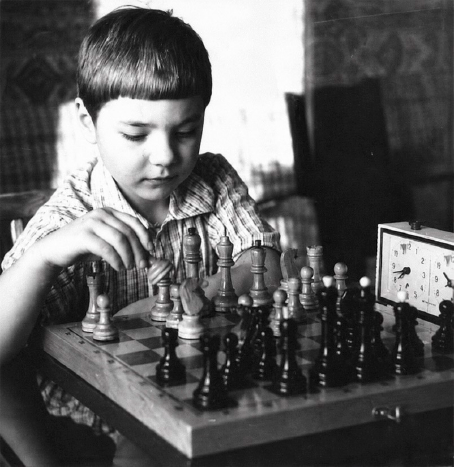
I was first introduced to chess by my father when I was about five years old. I learned on an old wooden chessboard that we had at home, and it was missing some of the pieces. For the missing pieces, we used plastic bottle caps and wrote the letter of the piece on top of each one. I fell in love with the game almost immediately. And my love for it grew as I learned new combinations. I was especially inspired by piece sacrifices. I still remember the day I delivered a smothered mate against my father after sacrificing my queen. During the first year, I simply enjoyed playing, without thinking about anything except the beauty of the combinations. And of course, I had no idea where this wonderful game would eventually lead me.
When I was six years old, two important things happened to me. First, I received a new handmade chessboard for my birthday, and this time it had all 32 pieces. By the way, I still keep that chessboard in my collection, and I consider it the most valuable one I own.
Second, I was enrolled in a chess club. It was there that I first realized that chess was not just a game I played at home with my parents. There were hundreds of other players, tournaments, ratings... And that was it. There was no turning back. I became literally obsessed with chess and with winning, and everything else stopped existing. Did that cause me problems at school? Yes, it did. Did I play chess all the time, even during the summer when the other boys were outside playing football? I did. Do I regret any of it? Absolutely not.
Chess opened the door for me to professional sport, where I managed to win many tournaments and achieve the highest title - International Grandmaster. But the most pleasant surprise was waiting for me after my playing career was over. I realized that I could use my knowledge to help chess players with different backgrounds and different playing levels become stronger and achieve their own goals.
And you cannot even imagine how surprised and happy I was when I realized that I enjoyed doing that even more than playing chess itself.

BEYOND RATING
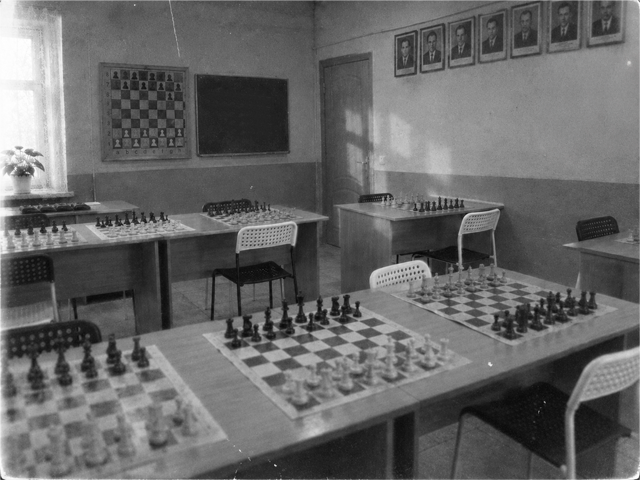
I know that many chess players, when choosing a coach, first of all focus on the title and rating of their coach. And indeed, the Grandmaster title implies many years of experience competing in the strongest chess tournaments, as well as a deep understanding of the game, especially strategy and the opening.
But when I first started teaching, I realized that playing experience alone would not be enough. It is very important to know how to explain the material correctly, especially when working with someone who is new to chess. Every student has their own way of thinking, their own pace, and their own strengths and weaknesses. That means I cannot teach every student by default using the training program that helped me achieve success. After all, we are all different, and everyone needs their own approach.
That is why I have spent a huge amount of time developing different training programs designed for different playing levels, with separate programs for children and adults. But, for example, even if three adult students with approximately the same rating and playing experience came to me, I would most likely teach each of them in a different way, because when creating a training plan I take into account the student's goals, the amount of time they are willing to devote to chess, their preferred learning format, their playing experience, and many other factors.
In practice, this means that the training program should match not only the student's current playing level but also their final goal. Preparing for serious tournament competition is very different from teaching someone who plays exclusively online or simply wants to enjoy the game more. That is why I do not use ready-made training templates. Instead, I try to build a training system that will be the most effective for that particular person.
WHAT I HAVE LEARNED FROM TEACHING
The most important thing I have learned over the years of working as a chess coach is that, with the right approach, any student can improve. Many players, especially adults, come to my lessons completely convinced that their limit is 1500 on Chess.com. They believe that if they ever manage to reach that rating, it would be nothing short of a miracle.
I understand that this way of thinking is largely because all people talk about is how the greatest grandmasters reached the top after starting to play chess when they were four or five years old. But almost nobody talks about those who started as adults and, after just a few years, reached 2000 on Chess.com or became a National Master. Over the years, I have worked with many adults who achieved exactly that-not just one or two. Of course, compared to the achievements of the greatest grandmasters, their success may not seem like something special. But as a coach, I know how much these results meant to them and exactly what it took to achieve them. That is why I am proud of every one of those students.

There are also plenty of skeptics among younger players. Very often these are teenagers who started playing chess at the age of 13-15 and are convinced that the road to professional chess is already closed to them. Which, in my opinion, is also a big misconception! In my experience, they are often just as wrong as the adults who believe they have already reached their limit.

Of course, believing in your potential is only the beginning. The reality is that improvement doesn't always happen quickly. I have also worked with players whose progress seemed to stall for months. And that situation is completely normal. At such moments, it is important for the student to be patient, and for me as a coach, it is a signal that the current training system is not the right fit for that student and that I need to keep looking for a better approach. And this certainly does not mean that the student is untalented! But when you finally find exactly what works and everything starts running like clockwork, something incredible happens to the student's rating-it skyrockets in a very short period of time.


SMALL CHANGES CAN LEAD TO BIG RESULTS.
And I'm being completely serious when I say that sometimes you only need to change one small detail. For example, playing online games at a different time of day or spending 30 minutes warming up with tactical puzzles before playing. But in other cases, it becomes necessary to completely change the approach to the game.
Over the years of teaching, I have also realized one more important thing: progress in chess is almost never linear. Many students expect their rating to increase little by little after every month of lessons. In reality, it works very differently. Sometimes a player can stay at roughly the same level for several months and then, within just a few weeks, make a huge leap forward. That is exactly why I always ask my students not to judge their progress based on the results of a single week or even a single tournament.

STUDENTS AROUND THE WORLD
Over the years I have had the priviledge of working with students from more than 20 countries. No matter where you are, quality chess coaching can help you achieve your goals.


 USA
USA Canada
 UK
UK India
India Russia
 Belarus
 Mexico
 Australia
 China
China Bangladesh
 Madagascar
 Curaçao
 Vietnam
 Singapore
 New Zealand
 Sweden
 Germany
 Spain
Spain Morocco
 Argentina
 Brazil
 Switzerland
MY MISSION