Everything Parents Need to Know About Chess
So, your child has become interested in chess. Perhaps this happened just recently, and he is now in the process of learning the pieces. Or perhaps your child has already been playing for a long time, and you are seriously beginning to think about whether he can become a professional athlete. However, even if your child is already a tournament player who sets himself the goal of achieving great heights and is confidently moving toward his first chess title, this article will be useful for you in any case-for the parents of chess children. I, Grandmaster and chess coach Valery Filippov, have tried to answer in as much detail as possible all the questions that I receive from time to time from the parents of my students. The article turned out to be quite long, but also very informative. I wish you pleasant reading. By the way, I will be very glad to hear your feedback after reading it!
Is Chess Really Beneficial for a Child?
Definitely yes. It seems to me that there can be no other answer. I do not think that I will open up a new world for you if I say that chess greatly develops logic and analytical abilities. And these two skills are useful absolutely everywhere, starting with school subjects, especially mathematics, and ending with the future profession that your children will have.
Chess stimulates the brain very strongly and constantly keeps it in shape. This is very noticeable among tournament players, who can play one chess game-just imagine-for four to five hours in a row without breaks. This greatly develops a child’s perseverance and endurance.
I know many examples of successful people who transferred the chess model of thinking into real life and achieved great heights in their careers, sports, or creative work. Therefore, without any doubt, I consider chess to be an extremely useful hobby/sport. Especially in the age of modern technology, when most children are absorbed in useless video games, YouTube, or TikTok.
At What Age Should a Child Start Playing Chess?
Let us immediately establish the lower age limit. You can begin teaching a child from the age of three. But most likely, an understanding of the game will begin to come to him only at the age of four or five. Even among world champions, I do not know anyone who mastered chess earlier.
Now you may ask me: what if my child is eight, ten, or even fifteen years old? Is it too late? Of course not! Although here the question needs to be specified: too late for what? To become world champion? Then yes, it is too late. To become a grandmaster? No, by no means. It is still possible. To become the best at school or in your district/city? No, it is just the right time!
Children absorb new material very quickly. Among my students, there were examples when a fifteen-year-old student came to me with the goal of learning to play chess so that he could represent the university team when he enrolled there. As a result, in three years he did not merely get onto the team-he even received his professional title and became a FIDE Master. Therefore, it is necessary to try at any age. Neither I as a coach nor you as a parent know for certain how much potential your child has in chess. Perhaps in one year he will progress as much as others progress in three. Believe me, children are unpredictable! Although children usually learn faster than adults, they also face a completely different set of challenges throughout their chess journey.
I would also note that chess does not have such a clear system for advancing young athletes as, for example, basketball or hockey. It is clear that if your child started playing basketball at the age of sixteen, he will no longer make it into the NBA. Every year matters there. But chess is structured differently. Since there is no connection here with physical form and health, age is much less important.
You may be surprised, but even some of my adult students who came to me at the age of thirty or older achieved certain success in chess and even joined professional teams and took part in regional tournaments.
Is Chess a Sport?
Definitely yes. Because you compete against your opponent. It is true that there is no physical struggle in chess, but there is such a strong brain storm. I assure you, professional chess players experience such severe exhaustion after a long tournament game that it cannot be compared with any physical sport! By the way, as soon as I wrote this, I thought about the paragraph where I wrote about the definite benefits of chess 🙂
Chess is about struggle. It is about constant training and self-improvement. Progress in chess is possible only through training and persistence. This is exactly the chain that works in all sports. And this is exactly what makes chess a sport.
How to Understand Whether My Child Can Become a Professional Chess Player
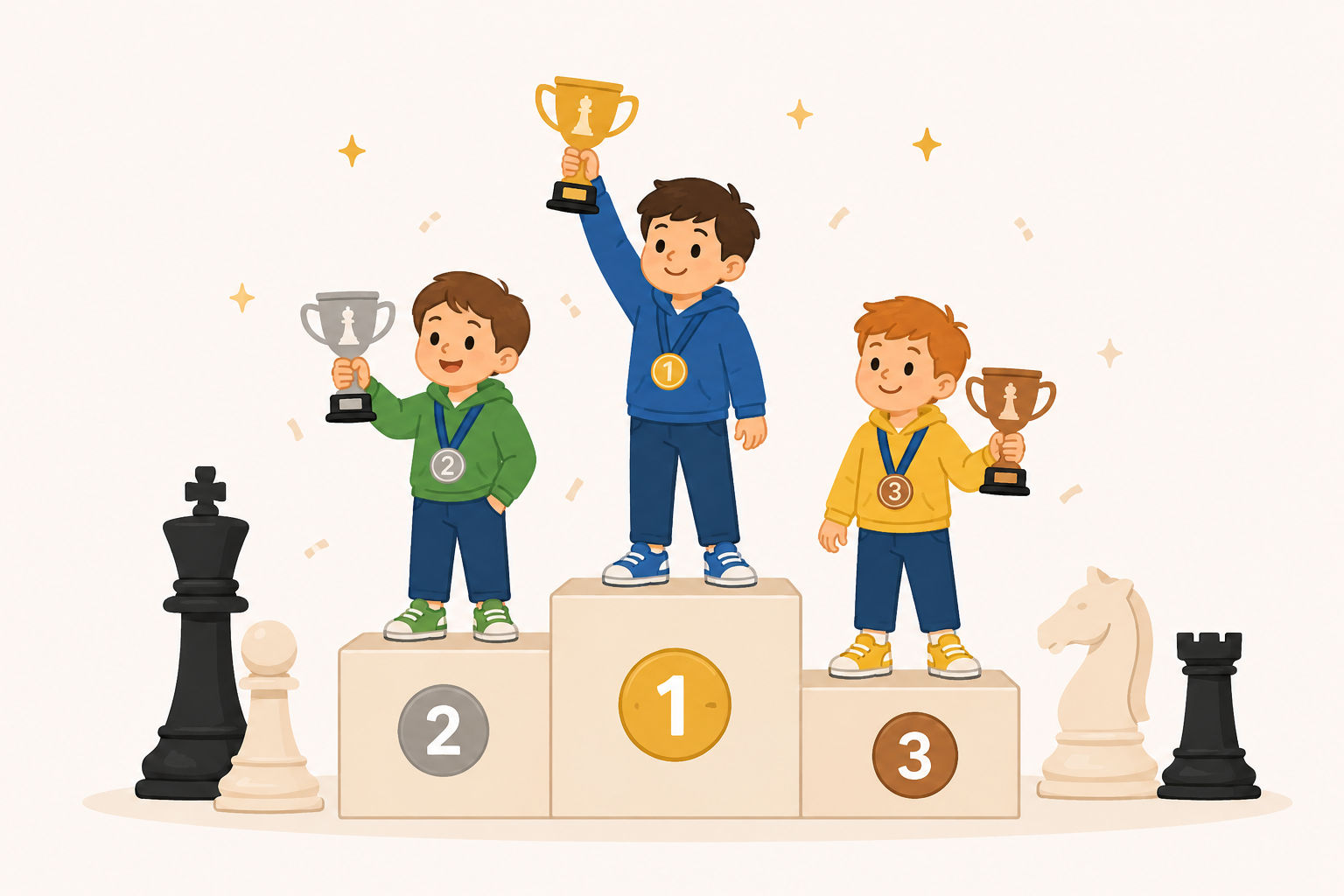
I believe that in order to become world champion or be in the world’s top 300, a person needs to have a certain talent and predisposition toward chess. But in order to become a titled chess player and a professional player, other qualities will be required first of all. If your child has already developed the ability to work hard and knows how to focus, consider half the work already done. If he does not have these qualities, do not worry-they can be developed.
It also matters greatly whether your child knows how to accept defeats. I would say that this is one of the most common problems. A child is afraid of losing, and because of this he cannot play games. But at the same time, he likes to train, solve chess puzzles, read books, watch educational videos, and so on. Or there is a similar problem-the child has a hard time dealing with failures. This point is similar to the first one, but it is more about painful defeats. For example, a child lost the final decisive round of an important tournament, took second place, and became discouraged after that. Once again, I want to note that these are all skills that can be developed! As a child, I also strongly disliked losing and often cried, but with the help of my parents and coach, I managed to overcome it, and your children will certainly succeed as well-the main thing is to help them correctly!
A few more words about which children find chess difficult. These are hyperactive children and children diagnosed with ADHD. Since chess requires constant concentration and keeping focus on a large number of pieces, it is very difficult for such children to learn, but only at first! I have had successful cases among students whom I helped develop their own approach to the game and adjust their focus of attention. Yes, this takes a certain amount of time, but it is also possible!
Should a Child Become a Professional Chess Player?
Good question! I will answer yes, but first of all in order to build character and increase the love for the game, because the competitive element and tournaments are the most interesting things in chess.
If your goal is for your child to become a professional chess player, then I would like to ask what exact privileges you want your child to receive. I want to disappoint you right away-there is practically no money in professional chess. Even if your child becomes a grandmaster and enters the top 100 players in the world, he will not become a millionaire. Despite the fact that chess has become very popular, it is still not a well-funded sport. Therefore, having a high title, your child will be able to teach other chess enthusiasts or run his own chess channel/blog. But he will not be able to live by earning money from tournaments and prize money. This is unrealistic and unprofitable.
However, professional chess still has quite a large number of privileges!
⭐ Privileges of Professional Chess
- Building Character and Developing a Personality Through Sport
Here your child can receive all the privileges of a full-fledged professional athlete. Because throughout his career, he will constantly have to learn to overcome himself: his laziness, weakness, and other negative qualities on the path toward improvement. This is exactly what a child will take with him later in life and into all other areas when he plays his last chess game, if he decides to leave this sport. Believe me, nothing will pass without leaving a trace. This analytical way of thinking will stay with him forever and can be successfully applied in other areas as well.
- Benefits at School/College/University
Many educational institutions form various sports teams. I am sure you know about this. And many of them also have chess teams, where chess players receive financial scholarships and certain other privileges. For example, The University of Texas at Dallas, UT Dallas, fully covers tuition and mandatory fees, which can amount to forty to fifty thousand dollars per year. This is a real example that I know for certain, because my student studied there under such conditions.
- Strong Social Status
Believe me, even outside chess circles, being a grandmaster or even holding a lower title is highly respected. Of course, this point does not have specific privileges like the previous point, but, for example, one of my adult students got a job under the conditions of his dreams because his future boss, who turned out to be a chess enthusiast, was very interested in the fact that my student was a professional chess player. And he treated him, as it were, with respect and trust by default. Again, this point is very broad, and neither I nor you will ever know for certain where this status will be useful to your children, but believe me, as a rule, such a situation always appears. Millions of people play chess, and just as many respect this game.
How a Child Can Study Chess Independently
The best method and the most common situation is when a child is taught to play by someone from the family or at a local chess club. If this is not possible, then you can try using online resources or books, depending on what is closer to your child’s preferences. Among online websites, I can single out ChessKid as my favorite. And if your child is older than twelve, then Chess.com. In essence, it is the same platform, only styled differently for different ages. There is a huge number of free and paid lessons, a lot of gamification, and fun exercises. So I recommend this platform-I have received a lot of positive feedback about it from my students.
If you want your child to learn from a book, then here is my favorite-How to Beat Your Dad at Chess. But I will immediately note that it is much easier for modern children to learn online.
Should You Hire a Chess Coach?
If your circumstances allow it, then my answer is definitely yes. Moreover, this can be done at any stage of your child’s development as a chess player. Even if he does not yet know how the pieces move. A good coach is able to instill and increase a child’s love for chess and create a clear training system for him, according to which he can progress at a calm pace without wasting time on unnecessary or ineffective training methods.
And when choosing a coach, first of all I advise you to focus on reviews from other students and personal qualities, rather than on the title and experience as a player. I regret to state the fact that among professional chess players there are few truly competent mentors who can establish a connection with a child. This problem is connected with the fact that professional chess players essentially have nothing else left to do except teach, since they cannot live from tournament victories and money. And many of them teach almost out of desperation, which is both sad and wrong.
Therefore, be sure to pay attention to whether the coach is able to establish contact with the child and hold his attention. This is the most important thing! I would also note that a good coach may not have a chess title at all, but at the same time may be able to involve even an uninterested child in chess! If you’d like to learn more about choosing the right chess coach, check out this guide.
Online vs. Offline Chess
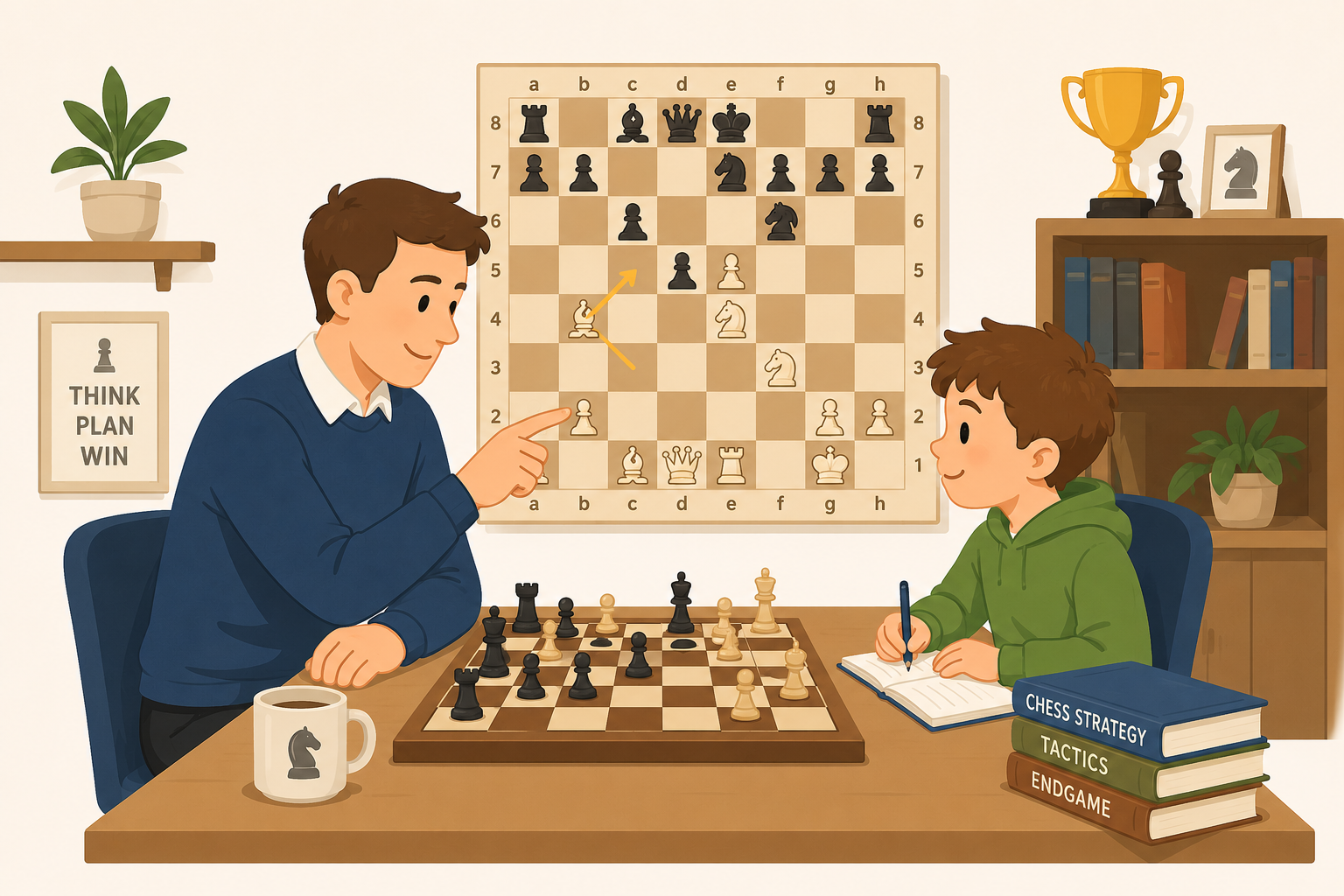
Let us examine one more situation. Your child plays only online chess, and you have wondered whether he should try playing chess in person. And of course, I advise doing this. If there is a chess club near your home, be sure to take your child there. Or take him to some friendly tournament or chess-related event. Community is very important! It helps maintain a child’s interest and can additionally motivate him. At a chess club, he will find himself in an environment with healthy competition, where, by the way, he can also find new friends. Why not?
Even if you have a relative or acquaintance who knows how to play chess, try to organize an in-person match for your child. I am sure he will be delighted! After all, when playing online chess, we experience only a limited range of feelings and emotions compared with in-person chess.
❤️ How a Parent Can Support Their Child
- Be sure to encourage any of his achievements and victories, even the smallest ones. For example, when he happily comes up to you and says, “Mom, I defeated the level-three chess bot,” then be sure to give him some kind of reward, perhaps something tasty. Of course, not every time, but with a certain regularity, I definitely advise you to do this.
- Try to immerse the child in the chess environment. This is exactly what I spoke about in the previous point. Even if he finds at least one chess-playing friend, believe me, this can change a lot.
- Help him create a regular training schedule. Gradually begin to teach him to study chess every day for at least thirty minutes. After all, consistency is the key to success in any sport.
- Help your child set realistic goals. And always start small. For example, if your child is already one of the best chess players at his school, then carefully guide him toward taking first place in the next tournament. But under no circumstances through criticism or comparison with others. This will only cause harm. And, of course, do not immediately set global, impossible goals such as, “Well, since you like chess, that means you must become a grandmaster before you finish school.”
These are only the basics. If you’d like to learn more, I’ve put together a separate guide with practical advice on how to help your child improve faster at chess.
Several Typical Mistakes Parents Make
- Excessive Pressure
This is especially common among parents whose children participate in chess tournaments. You cannot even imagine how many times I have seen the sad situation when a child was playing a game, fell into an unfortunate trap, and lost. The poor child was already upset and crying, and the parents were making things even worse. If you do this constantly, then eventually the brain will produce a defensive reaction-to quit chess. And believe me, this is exactly what most often happens under pressure.
- Devaluation
Another common situation. Many parents simply do not attach importance to their children’s interest in chess. A child may often hear phrases such as, “Why do you need this chess?” or “Chess will not feed you anyway,” or “You would be better off doing a real sport.” By the way, I also heard some of these phrases from my own parents from time to time.
- Do Not Shift the Child’s Focus of Attention
Many parents want to make Julius Caesar out of their child. They want him to play chess, know several languages, have a musical education, and know all school subjects perfectly at the same time. As a rule, if you follow such a strategy, the child achieves nothing in any area. Moreover, he may develop a dangerous failure syndrome. In other words, he will not believe in his success every time he wants to start something new. My advice: for the ideal balance, it is better to have two hobbies. One physical and one intellectual. Chess is perfect for the role of the second one.
Final words
No matter how old your child is and no matter what his current playing level is, believe me, dear parents, you are already very lucky. After all, your child, most likely consciously, has chosen and fallen in love with chess-this wonderful game that is capable of developing in him a huge number of positive qualities, such as analytical thinking, logic, persistence, and willpower. As a parent, try to increase your child’s love for chess, constantly support him, and, of course, rejoice in his victories, of which I hope there will be many on his long and interesting chess journey.
♟ Article prepared by Grandmaster and chess coach Valery Filippov ♟
📖 Continue Improving Your Chess:
▸ How to Help Your Child Improve Faster at Chess
▸ How Important Is Tactical Training for Chess Improvement
▸ Why You’re Not Improving at Chess: 8 Mistakes You Must Fix
FAQ
How Much Time Should Be Devoted to Chess Per Week?
It all depends on your child’s age and goals. I would note that chess should be practiced every day, even if only for 30 minutes. With 9-10 hours of independent training per week, your child can realistically aim to become a professional chess player.
Can a Child Become Good at Chess if They Start Late?
Definitely yes! I know many examples of grandmasters who started playing chess at the age of 14 or older and still managed to achieve great success.
Does My Child Need a Chess Coach?
Not necessarily, but a good chess coach can significantly speed up your child’s progress and provide great support.
Can Chess Help Children Perform Better in School?
According to statistics, this is exactly what happens. This is especially noticeable in exact and calculation-based subjects such as mathematics and geometry.
Is Professional Chess a Good Career Choice?
I would say that it is not a bad option, but far from the best one financially. It is certainly an interesting path, but you should not expect to make a lot of money from winning tournaments.